| Are you interested in learning a language but do not know where to begin?! In this blog post, we will discuss the importance of grammar in language learning and provide our meticulously created guide to help you get started. This is NOT how we are doing it in our lessons, we make it much easier, but it’s a little treat for those passionate about all things grammar! Learning Serbian is not the easiest thing in the world, but we have just the right tools to help you! |
The Importance of Grammar in Language Learning
If you are anything like the majority, the sole thought of grammar during language learning is enough to give you a headache. However, grammar is extremely important if you want to master a language properly. It’s not the most important element, of course, yet knowing grammar will make you not only learn the language but understand it as well – understand its people, the mentality, the history, the nuances.
Serbian grammar is no exception! Although it’s extremely challenging for new learners, learning and knowing it is just as rewarding. By accepting the necessity of Serbian grammar, you are fully embracing the learning process and mastering communication skills much faster!
A Beginner’s Guide to Serbian Grammar
We have created a beginner’s guide to Serbian grammar to help you on your journey. The guide includes:
-
- The Basics of Serbian Nouns
-
- Understanding Serbian Verbs
-
- Adjectives and Their Agreement
-
- Sentence Structure and Word Order
So, without further ado, let’s begin!
1. The Basics of Serbian Nouns
Serbian nouns have three grammatical genders: masculine, feminine, and neutral (neuter). This is how you will recognize them:
| Gender | Noun Ending | Examples |
| Masculine | consonant | čovek, televizor, telefon, prozor, vozač, krompir… |
| Feminine | -a | žena, vaza, majka, šolja, terasa, stolica… |
| Neutral/Neuter | -o/-e | dete, selo, ogledalo, mesto, leto, Sunce… |
Most of the time, masculine gender nouns end on a consonant, feminine gender nouns end with an -a, whereas neutral gender nouns end with an -o or an -e.
When it comes to nouns, it’s essential to mention cases, or as we call it in Serbian: padeži. There are seven cases: nominative, genitive, dative, accusative, vocative, instrumental, and locative. Nouns change their endings based on which case they are in, and knowing these forms of nouns and understanding the cases will help you comprehend the full meaning of what is being stated.
2. Understanding Serbian Verbs
Serbian, just like any other language, has a lot of tenses. Although it recognizes past, present, and future, most tenses fall under the category of past tenses. Why is that?! – Well, our best guess is because Serbian people loved to talk about their history, legends, and myths and relied heavily on their tradition and ancestral pride.
Each person (3 in singular, and 3 in plural) has its own unique form or ending of the verb based on the person or based on the gender. Let’s use the verb raditi (work/do) in prezent (present tense), perfekat (past tense) and futur I (future tense) forms to show what we mean.
| Tense | Form |
| Prezent |
singular Ja radim plural Mi radimo |
| Perfekat |
singular Ja sam radio/la/lo plural Mi smo radili/le/la |
| Futur I |
singular Ja ću raditi plural Mi ćemo raditi |
3. Adjectives and Their Agreement
In Serbian language, adjectives agree with nouns in gender, number and case. Meaning that if the noun is in dative case for example, the adjective is going to be in dative case as well. Let’s paint an example:
| Case | Masculine | Feminine | Neutral |
| Nominative | dobar učenik | dobra devojka | dobro pile |
| Genitive | dobrog učenika | dobre devojke | dobrog pileta |
| Dative | dobrom učeniku | dobroj devojci | dobrom piletu |
| Accusative | dobrog učenika | dobru devojku | dobro pile |
| Vocative | dobri učeniče | dobra devojko | dobro pile |
| Instrumental | s dobrim učenikom | s dobrom devojkom | s dobrim piletom |
| Locative | o dobrom učeniku | o dobroj devojci | o dobrom piletu |
4. Sentence Structure and Word Order
Now, when it comes to sentence structure and word order in Serbian, it usually follows this pattern: Subject – Predicate (Verb) – Object. For example:
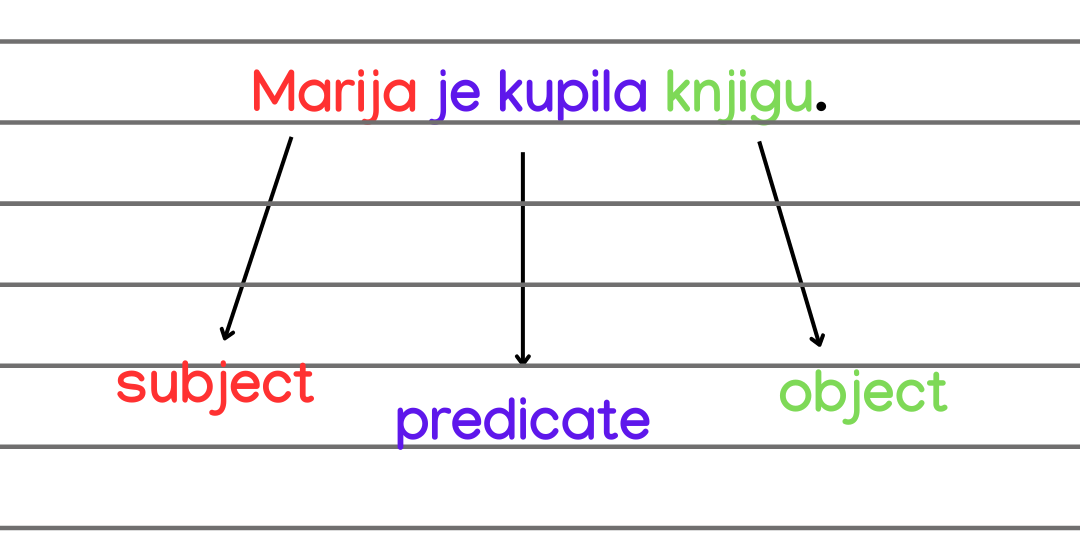
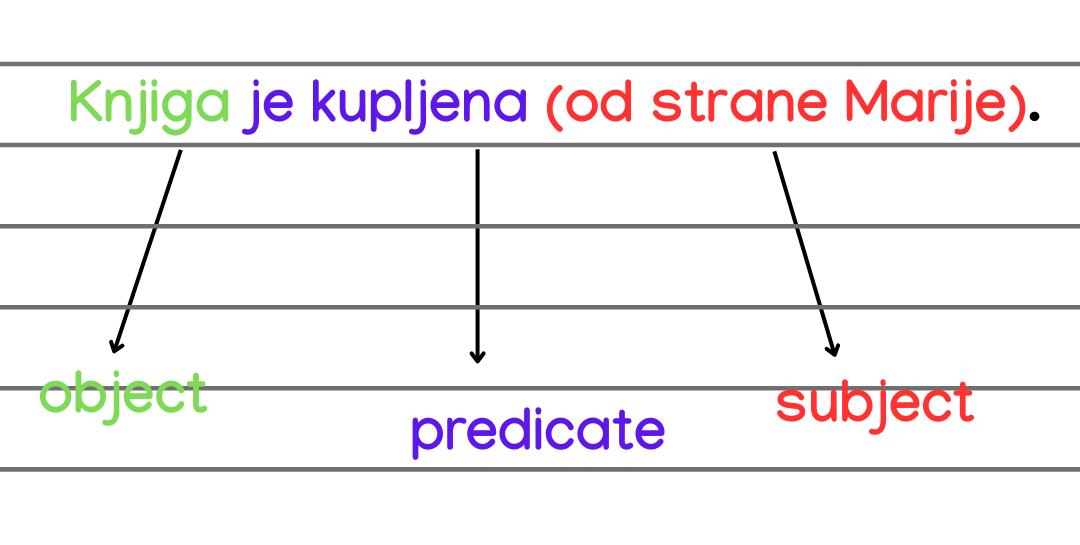
However, when you reach an intermediate or even advanced level, and if you want to put emphasis on the object, you can use the passive voice, or trpni glagolski pridev form of the predicate/verb in Serbian.
So, What’s Next?
If this guide provided you with clarity and comprehension, then you are probably going to love the lessons we offer. Don’t hesitate to contact us and check out our webiste for more information. We are waiting for you!.